


Hair loss is an area of personal concern for a significant number of men in the United States. In particular, genetics and aging receive the biggest amount of criticism, but new evidence has now made it clear that stress and hair loss are directly associated. Men trying to cope simultaneously with their work, financial, family, and technology-driven stress in their lives may experience an amount of hair loss or shedding. The reason is not mere chance. It is biology.
Learning more about the connection between hair loss and stress can be very empowering for men. It can give them the power to do something about it. It’s all about the ways in which the physical effects of stress can derail the natural process of the hair cycle. The best part is the fact that men can do something about their hair loss due to stress in order to stimulate its regrowth.
Here, we will help in understanding the scientific reasons for anxiety hair fall, the mechanism of cortisol hair damage, telogen effluvium stress impacts, and proven ways to prevent stress-induced hair shedding.
To better comprehend the relationship between stress and hair loss, it is important to have an understanding of how healthy hair grows. Every hair on the human body grows from a follicle and goes through a cyclical process that consists of three stages:
At any given time, about 85-90% of the hairs of the scalp are in the growth phase. Stress causes this balance to be disturbed, resulting in more hairs entering the shedding phase. This phenomenon of telogen effluvium stress can be very important for men.
Here is a glimpse of it.
The stress experienced by the body triggers cortisol hair damage and the production of hormones. The hormone is crucial for immediate survival. However, its continued production can have negative consequences on the body. The scalp is one of the areas affected.
Cortisol hair damage happens due to an overproduction of cortisol, which can interfere with normal hair follicle function. According to research, an overproduction of cortisol leads to:
With time, the constant cortisol surge causes the hair to weaken, thin, and become brittle, leading to shedding. This accounts for why stress-related hair loss usually occurs weeks or months after a stressful incident has occurred.
Telogen effluvium stress is one of the most documented associations between stress and hair loss. Telogen effluvium stress happens when stress causes many hair follicles to switch from the growth phase to the resting phase.
Triggers may include:
Telogen effluvium in men appears as diffuse thinning of hair rather than patchy balding. The hair can come out in clumps during bathing and/or brushing. However, fortunately, Telogen effluvium hair loss is reversible with stress management.
Anxiety hair fall requires attention because it leads to a vicious cycle. It causes more anxiety because of the increased levels of the cortisol hormone, resulting in hair loss. Observing hair fall multiplies anxiety, further worsening the situation.
Men experiencing anxiety hair fall can also develop other habits, such as touching their scalp too much or pulling their hair to compensate for hair loss. As time progresses, constant anxiety contributes to imbalanced hormones, sleep patterns, and immune systems, which all impact hair. Often, directly dealing with anxiety is a crucial point in overcoming the cycle of stress-related hair loss.
Stress and hair loss go hand-in-hand, but stress by itself is hardly ever the sole reason for it. Male pattern baldness, also known as androgenetic alopecia, is still the most prevalent cause of permanent hair loss among men. Stress can accelerate genetically triggered hair loss by shortening the growth phase.
In many instances, conditions occur in men simultaneously. By managing stress effectively, hair loss can be slowed down even if it is genetically induced.
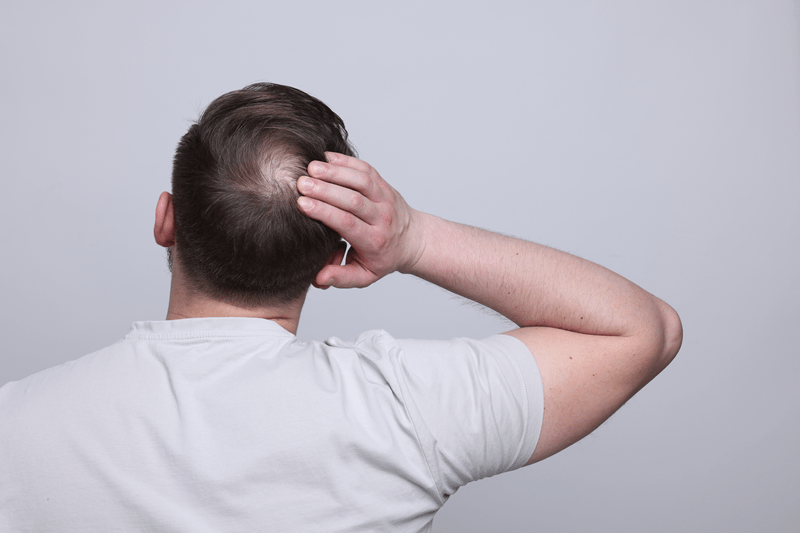
To stop stress and halt hair loss, it is necessary to tackle the stress inside, along with hair care techniques on the exterior of the body. Science has proven a layered approach to be effective.
By applying proven techniques for stress management, cortisol levels are reduced, promoting normal hair growth. Some effective methods are:
Moreover, practicing stress reduction techniques on a regular basis plays an equally important role in reversing stress as well as hair loss.
Stress leads to depletion of essential nutrients required for hair growth. Some essential nutrients for hair growth required by stressed men experiencing hair loss include:
A balanced diet promotes stress hair problems management through internally nourished follicles.
During stress and hair loss, over-grooming is likely to exacerbate shedding. Small modifications help prevent fragile hair:
Minimizing stress to hair physically helps reduce stress to hair internally.
If telogen effluvium stress and anxiety hair loss continues for longer than six months, it would be advisable to seek professional advice. This is because doctors can check whether underlying conditions like thyroid dysfunction and nutrient deficits are causing the hair loss.
In other instances, treatments such as topical minoxidil can aid in hair regrowth while stress levels can be normalized. Medical assessment is necessary to ensure that both stress and hair loss are adequately dealt with.
Among the most common questions concerning stress and hair loss that men ask is if stress-induced hair loss is permanent. In most stress conditions linked to telogen effluvium, hair loss is reduced in three to six months once stress is managed.
Usually, hair regrowth tends to follow. However, it may take several months to observe improved results. Taking stress-managing hair habits helps recovery significantly.
Prevention relies on building resilience. Proactive stress management on the part of men prevents recurring stress attacks and hair loss.
Long-term prevention methods are:
Men can prevent damage to their hair due to high levels of cortisol by controlling their levels.
The connection between stress and hair loss is not only an experience that only some people have, since there is scientific evidence to explain why people experience hair loss when they are stressed. These include cortisol, disrupted hair cycles, telogen effluvium stress, and anxiety-related hair fall.
The key message that men should understand is that stress-related hair loss is typically a temporary phenomenon. When men learn appropriate stress hair management strategies, eat healthy food, and follow effective stress management tactics, they may see their hair follicles recover. Managing stress, moreover, is not only beneficial for the mental and physical health of individuals but also a highly effective way for men to maintain their hair.
In most cases, stress and hair loss can be temporary. Telogen effluvium stress, which is related to increased shedding of hair, is usually temporary because once the stress levels decrease, hair grows back. Stressful conditions, however, can accelerate genetic hair loss by promoting high levels of cortisol hair damage.
By following effective stress hair management practices and techniques to manage stress, shedding problems are often resolved within 3 to 6 months. However, noticeable hair growth may take longer to appear.
Quite often, once the issue of anxiety is under control, the problem of hair fall can be resolved. Furthermore, reducing cortisol levels through therapy, exercise, improved sleeping habits, or stress management can ensure a normal hair growth cycle.
This content was created by AI