


Male pattern baldness is a common type of hair thinning seen in men as the years move on. It usually starts small, then slowly becomes easier to notice.
This blog explains male pattern baldness causes, the male pattern baldness stages, and the basics of androgenetic alopecia. It also covers simple options for hair loss treatment for men and practical hair regrowth treatments that can support better control.
Male pattern baldness is a long-term form of hair loss that follows a clear pattern. It often begins with slight thinning near the temples or a small thin spot at the crown. In many cases, it spreads across the top of the head while the hair on the sides and back stays stronger.
This hair loss does not happen in one day. It usually grows slowly, almost like a quiet shift that only becomes clear in mirrors, photos, or bright lighting. The hair strands may start looking finer. The volume may reduce. Styling starts taking extra effort. Then one day, the difference feels obvious.
The major causes of male pattern baldness are explained in the following points:
Some men are born with hair roots that are naturally sensitive. This sensitivity is often passed down through the family. It can come from either parent, so it is not limited to one side. When sensitive roots face normal hormone changes, they can begin shrinking earlier than usual.
Hormones play a strong role in hair growth. In some men, a hormone linked with male traits can attach to hair roots on the top of the scalp. Over time, this leads to smaller follicles and shorter growth cycles. That is why thinning tends to happen in a consistent pattern.
You must have noticed that age is one of the most common causes of male pattern baldness. As time moves forward, hair growth slows for many people. In men with this condition, more follicles gradually become affected. The changes can feel subtle at first, then become more noticeable over the years.
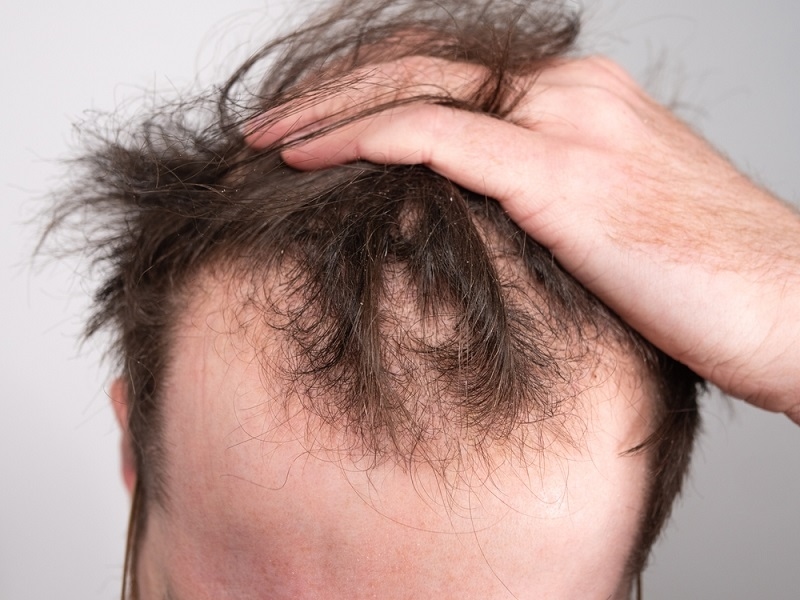
You can check the following list to understand the different male pattern baldness stages:
This stage starts quietly. The temples become a little lighter in density, and the hairline may pull back slightly. Many men do not notice it at first. They may think it is just a natural change. The crown often looks normal at this stage.
Here, the hairline recession becomes more visible. The front area can look thinner, especially under strong light. Some men notice the hairline shape changing when they pull their hair back or style it. It becomes harder to ignore, even if the crown still looks fine.
In this stage, the crown becomes thinner and less dense. Hair may still exist there, yet the scalp shows through more often. Photos from above or bright indoor lights usually reveal it first. This stage can appear along with a hairline recession or happen on its own.
Later male pattern baldness stages involve both the front and the crown widening. The hair between these areas becomes thinner, too. Styling becomes less effective because hair loses volume. The scalp becomes more visible even after grooming and oiling.
In advanced male pattern baldness stages, the thinning areas may meet. The top can appear mostly bare or very thin. The sides and back remain stronger, which makes the pattern stand out more. At this stage, men often prefer stronger support methods.
You can check the real benefits of hair loss treatment for men in the following list:
Hair loss treatment for men works best when started early. In the early stage, many follicles are still alive but weaker. Treatment can support those follicles and help them stay active longer. This can reduce shedding and help hair look fuller for a longer time.
A healthier scalp supports stronger hair. Many men notice that when scalp care improves, the hair also looks better. Less dryness, less itching, and less irritation can make grooming easier. Over time, the hair may feel stronger, and daily shedding can become less worrying.
Hair loss can feel personal, even if people do not say it out loud. Hair loss treatment for men gives a routine and a plan. It reduces helplessness. It helps men focus on progress rather than fear. Even small changes can improve confidence in daily life.
You can refer to androgenetic alopecia as the medical name for male pattern baldness. It sounds technical, but the meaning is simple. It refers to hair loss that happens due to inherited sensitivity and hormone effects.
In androgenetic alopecia, the follicles on the front and top of the scalp are more sensitive. Over time, certain hormones affect those follicles more strongly. That impact causes follicles to shrink. When your follicles shrink, they can grow thinner hair that can later make your hair weak.
The list below will help you with the top hair regrowth treatments for men:
One of the most common hair regrowth treatments involves applying a solution or foam directly to thinning areas. It is mainly used on the crown and sometimes along the hairline. It supports follicle activity and can help hair stay longer in the growth phase.
It reduces the hormone effect linked with follicle shrinkage. This method aims to protect sensitive follicles by lowering the trigger behind the thinning process. It can support hair retention and sometimes help regrowth in thinning zones.
Some men are advised a stronger hormone-control method when common options do not help enough. This approach targets hormone pathways more deeply. It can be useful when the hair loss pattern is progressing quickly or the thinning is spreading faster than expected.
Male pattern baldness may start quietly, yet it often becomes more visible with time. Learning male pattern baldness causes and male pattern baldness stages helps men act early with less confusion. With steady hair loss treatment for men and proven hair regrowth treatments, androgenetic alopecia can be managed with better control.
Male pattern baldness causes usually include inherited follicle sensitivity, hormone impact, and age-related changes.
Male pattern baldness stages are identified by the location where thinning begins and how it progresses. It often starts at the temples or crown and then widens across the top.
Androgenetic alopecia is the medical name for male pattern baldness. It means hair follicles are sensitive due to genes and react to hormone activity.
This content was created by AI